New commission - feasibility study for a university bio-incubator building

2009-05-06-bio-incubator.jpg

Easy adaptability, clear servicing strategy and good value were the three criteria that the client set for this new 4,000sqm research building.  Prior to selecting an architect they carried out their own research to find a good example of the type of building they were seeking.  Before approaching us, they had paid two visits to our research building at Oxford University’s Begbroke Science Park and discussed the design and use of the buildings with the University.

The laboratory buildings at Begbroke are regarded as being some of the most innovative in the UK in the way in which their design responds to regular and unexpected change of use.  The building type is known as ‘open’ or more helpfully as ‘adaptable’.  It recognises that it is better to design for easy future flexibility than to design a building that is optimised to the initial use.  The challenge with ‘open’ labs is how to accommodate the heavy services installation.  This is the problem that has been cracked at Begbroke. Here is a link to a 10 minute video which explains how the Begbroke buildings work:  www.stubbsrich.com/openbuildings

Constructing Excellence conference on climate change

At last week’s conference on the regional effects of climate change, both John Rich and co-director Nicholas Stubbs took a lead during the afternoon debates.  These looked at the effects of the recession on sustainability and at barriers to collaborative working.

John Rich chairs the research group within Constructing Excellence in Bristol.  John’s group is currently studying how value is perceived in the Higher Education sector: do students and academic staff see added value where construction professionals believe it exists?.

Nick’s experience of collaboration goes well beyond what most architects experience.  For many years he has worked closely with a major client who expects complete integration end to end: client to designer to specialist constructor to supplier to manufacturer.  We know, and can prove, that Sir John Egan was right in his Rethinking Construction report when he said that collaboration is how to improve quality and reduce cost.

BBC Newsnight interviews Stubbs Rich

2009-03-20-newsnight-main.jpg

Today, Friday 20th March, a BBC Newsnight interviewer, producer and cameraman spent the afternoon recording an item for tonight’s Newsnight.  The thrust of the article was the greater effect of the recession on the private sector than the public sector.

Why us?  Apparently the leader of the local chamber of commerce had made an announcement that Bath was less likely to be affected by the recession than most places because of its high proportion of public sector employees.  And with architects at the front end of the construction industry, we are likely to be hit hard and sooner than most.

Adding value is in demand, especially in a recession

Stubbs Rich continues to deliver in a very tough market with five new commissions confirmed in February.

Like many practices, over recent months we have experienced the deferral of imminent projects, however new instructions like these remind us that the economy has not stopped, it has just slowed down.

What is perhaps of greater interest is the segments of the market from which these commissions have come: residential; motor retail; and education.  Education could have been predicted but residential and motor retail? Surely not - but the common theme in all these new jobs is adding value: adding value to land and making projects better value.

From well-worn industrial space, to desirable contemporary workspace

2009-02-13-154-milton-park-main.jpg

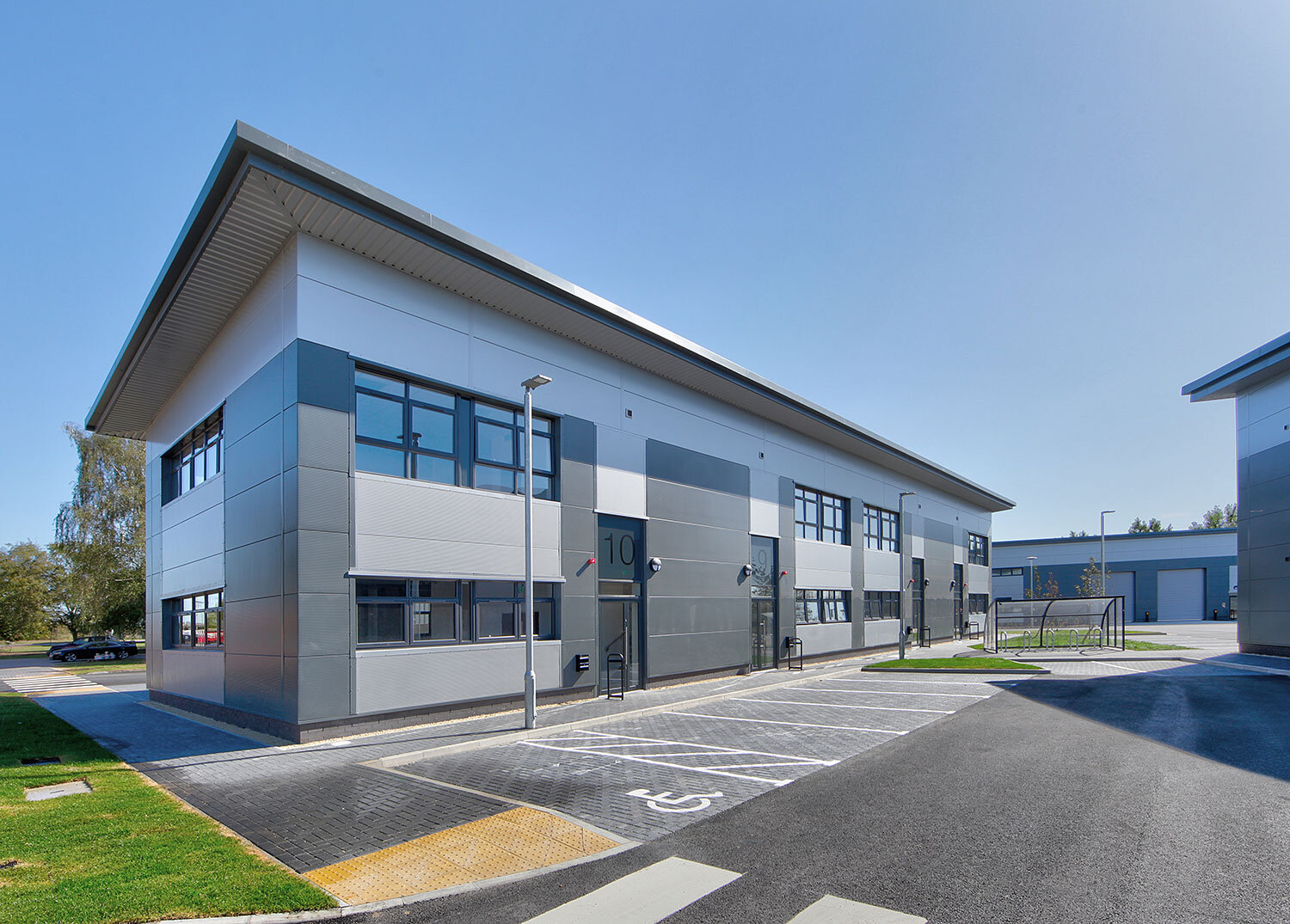
154 Milton Park was a tired industrial building from the 1970s that had had a variety of low-grade uses. MEPC approached Stubbs Rich to look at sustainable development options for the creation of flexible office / laboratory and production units. Taking into account the demands of a tight programme and tighter budget, we soon concluded that refurbishment would be the best option.

Our proposal included essential remedial works to the structural frame and concrete slab, and complete replacement of the envelope. This made sense in terms of economy, speed and responsible use of resources. The result internally and externally is an elegant, contemporary building, achieved at low cost and low environmental impact. The development has achieved a ‘Very Good BREEAM Industrial’ rating.